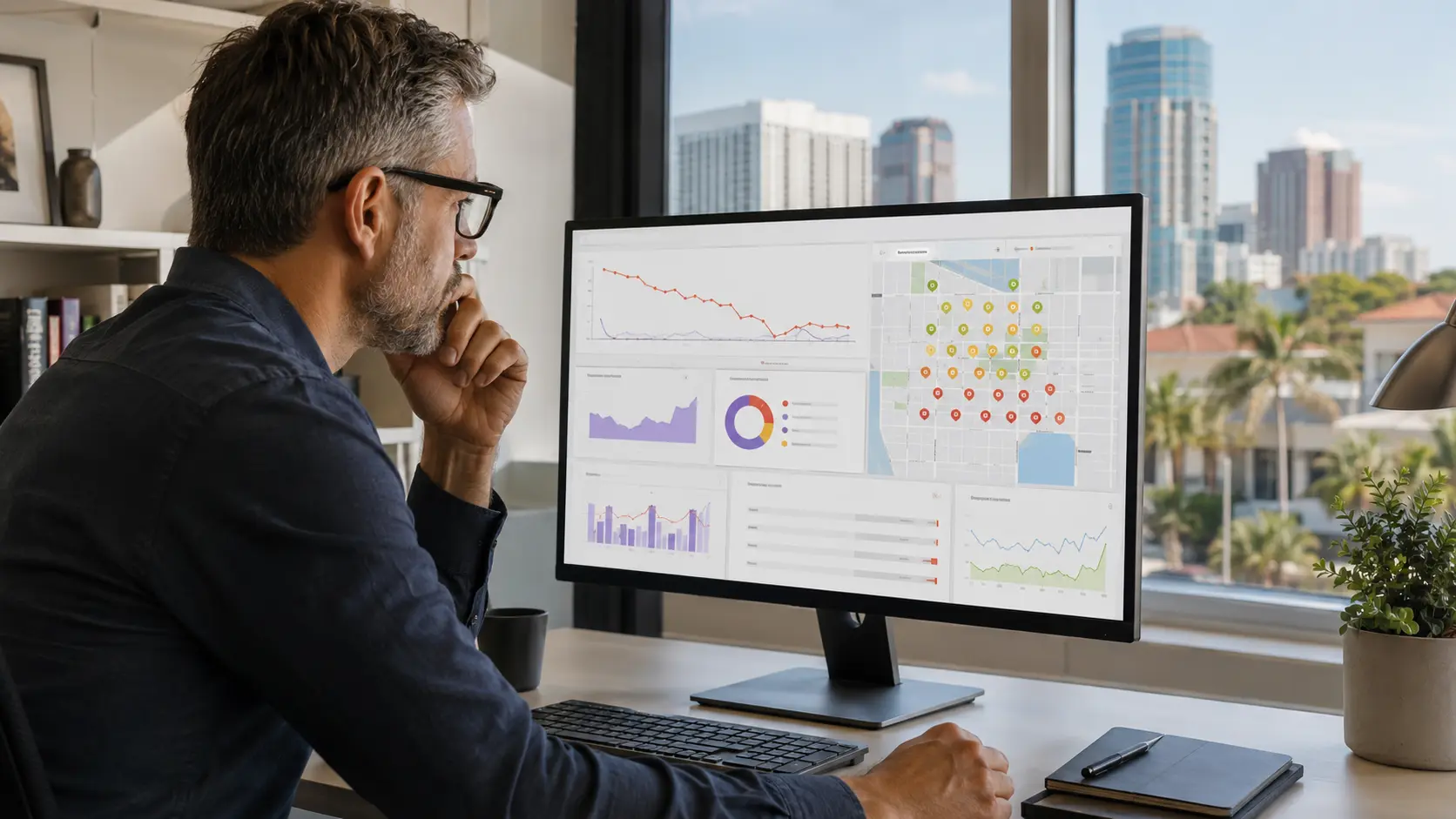
A sudden local ranking drop can feel urgent, but urgency is exactly what causes businesses to make broad changes before they understand the problem. The fastest recovery usually starts with slowing down long enough to diagnose the decline correctly.
A ranking change can come from the website, Google Business Profile, competitors, customer demand, an algorithm update, or the way the data was collected. The right response depends entirely on which of those changed.
Use our local SEO measurement framework to verify the decline across visibility, engagement, conversions, and leads. If the broader local search foundation needs work, return to our step-by-step local SEO strategy before treating one ranking as an isolated problem.
Key Takeaways
Confirm the drop before fixing it: Check multiple locations, queries, pages, devices, and reporting tools to determine whether the decline is real.
Preserve evidence: Record dates, screenshots, deployments, profile edits, and analytics annotations before making additional changes.
Separate Maps from organic search: A Business Profile decline and a website-ranking decline can happen for different reasons and require different fixes.
Avoid mass edits: Changing categories, pages, titles, links, and profile information at the same time makes the cause harder to identify.
Recover the business outcome: Rankings matter, but calls, forms, qualified leads, and revenue determine whether the decline requires immediate action.
Step one
Confirm that local visibility actually dropped.
Manual searches are influenced by location, device, personalization, and the exact wording of the query. One search from the office is not enough evidence to declare a ranking collapse.
Compare several signals before diagnosing the cause. The pattern usually tells you whether the problem is isolated to Maps, organic results, a specific page, a location, or the entire website.
Check the market
Review map-grid visibility across the same coordinates and priority searches used in earlier reports.
Check Search Console
Compare impressions, clicks, queries, pages, devices, and average position before and after the suspected drop.
Check conversions
Determine whether calls, forms, bookings, qualified leads, and revenue declined with visibility.
Check the timeline
Match the decline against website releases, URL changes, profile edits, outages, tracking changes, and seasonality.
Use the shape of the decline as a clue.
Diagnosis
Ten reasons local search rankings drop.
Work through the causes in the order supported by the evidence. Do not begin with the most dramatic explanation. Begin with the change that best matches the date, scope, and shape of the decline.
Your Google Business Profile changed
Category changes, address edits, service-area changes, duplicate profiles, verification problems, or a suspension can reduce or remove Maps visibility. Even accurate edits can trigger a review or temporarily change how Google understands the listing.
What to check
- Profile status, ownership, verification, and notifications
- Primary and secondary categories
- Business name, address, phone number, hours, and website URL
- Duplicate listings or unexpected third-party edits
If the profile is suspended or disabled, review the guidelines and gather business evidence before submitting an appeal. Repeated edits without understanding the policy issue can delay recovery.
A redesign or migration changed important URLs
Redesigns can remove content, change URLs, weaken internal links, alter headings, replace metadata, or introduce redirect problems. A cleaner-looking site can still lose search visibility if the migration did not preserve the signals attached to the previous pages.
Compare the old and new site
Review the URL map, redirects, content parity, internal links, canonicals, sitemap, analytics, and Search Console data. Important old URLs should resolve to the closest relevant replacement, not automatically redirect to the homepage.
Google cannot index the right pages
A page cannot rank if Google cannot crawl, render, or index it correctly. Accidental noindex tags, robots.txt blocks, canonical changes, server errors, soft 404s, and duplicate URLs can remove strong pages from consideration.
Inspect affected URLs
Use Search Console URL Inspection for specific pages and review the indexing report for broader patterns. Check the live URL, rendered page, canonical selection, response code, and the links Google can follow.

Competitors became more relevant or prominent
Your business can lose positions without becoming worse. A competitor may improve its service pages, reviews, local authority, categories, content, or proximity advantage. Search results are comparative, not scored in isolation.
Compare the complete result
Review the businesses that replaced you. Look at their pages, profile categories, review patterns, local references, offers, and search intent. Copying one visible tactic rarely explains the complete advantage.
Service pages lost relevance
Pages can become less useful as services, customer expectations, and competing content evolve. Broad copy, outdated details, missing proof, and unclear geographic relevance can make a previously strong page less competitive.
Check intent before adding words
Compare the page with the searches that lost impressions or clicks. Update the service explanation, process, qualifications, local proof, customer questions, and next step only when those additions improve the page for the visitor.
Internal links were removed or weakened
Navigation changes, deleted blog posts, redesigned templates, and content consolidation can reduce the internal links supporting an important service page. The page may still exist while becoming harder for users and search engines to discover in context.
Restore meaningful pathways
Link from related services, location pages, resources, and high-authority pages using descriptive language. Do not create large blocks of repetitive keyword links solely to manipulate rankings.
Review activity or reputation changed
A slower review pace, several recent negative reviews, removed reviews, or inconsistent responses can affect customer confidence. Reviews are only one part of local visibility, but they can also change calls and clicks even when rankings remain stable.
Look beyond the average rating
Review volume, recency, response activity, and recurring customer themes provide more context than the star rating alone. Use a consistent, ethical request process and address operational problems reflected in the feedback.
Business information became inconsistent
Incorrect hours, old addresses, mismatched phone numbers, duplicate directory listings, and outdated location pages can create customer friction and weaken confidence in the business information.
Prioritize the sources customers use
Correct the Business Profile, website, major maps, primary industry directories, and high-visibility local listings first. Chasing hundreds of obscure directories is rarely the best recovery action.
Google changed results or reassessed the site
Algorithm updates, new search features, different map layouts, and changes in customer expectations can shift visibility. A decline that aligns with a broad update does not automatically mean the site has a penalty.
Avoid reactive rewrites
Google recommends avoiding radical changes when pages are already performing well and the movement is small. Compare affected pages and queries, review the update timeline, and improve genuine weaknesses instead of chasing assumptions.
Search demand or seasonality changed
Traffic can fall because fewer people are searching, not because rankings failed. Weather, seasonality, economic conditions, news, and changing terminology can affect demand across the entire market.
Compare your site with the category
Use year-over-year data and Google Trends to determine whether the decline is specific to your business or shared across the topic. A market-wide demand decline requires different decisions than a visibility loss.
Recovery plan
Use a controlled local ranking recovery process.
Recovery is easier to evaluate when changes are staged, documented, and connected to a specific diagnosis. The timing below is a framework, not a promise that rankings will return on a fixed schedule.
Preserve and verify
- Record the affected queries, pages, and locations
- Confirm analytics and call tracking still work
- Capture Search Console and map-grid data
- List recent website and profile changes
- Check profile status and critical URL indexing
Identify the cause
- Compare Maps and organic patterns
- Review redirects, canonicals, robots, and noindex
- Compare affected pages with prior versions
- Audit internal links and navigation changes
- Review competitors, demand, and update timing
Fix and monitor
- Correct the specific technical or profile problem
- Restore useful content and internal links
- Improve pages where intent or proof is weak
- Annotate every meaningful change
- Monitor visibility, conversions, and lead quality
Choose the response
Know when to act immediately and when to monitor.
Correct confirmed failures
- The Business Profile is suspended, disabled, or no longer verified
- Important pages return errors, redirect incorrectly, or carry noindex
- Robots.txt blocks essential resources or sections
- Tracking stopped after a website release
- Business information is materially incorrect
Avoid unnecessary disruption
- One manual search shows a different position
- Rankings shifted slightly while leads remained stable
- The decline lasts only a few days
- A broad update is still rolling out
- Seasonal demand changed across the market
Save this process
Local ranking drop checklist.
Confirm the decline across multiple locations, queries, pages, and tools
Compare Maps visibility separately from organic website performance
Check whether calls, forms, qualified leads, and revenue also declined
Record recent website releases, URL changes, profile edits, and outages
Verify Business Profile status, ownership, categories, and core information
Inspect affected URLs for indexing, canonical, redirect, and response problems
Compare affected pages with their previous content and internal links
Review the competitors that replaced you and the intent they satisfy
Check review trends, customer sentiment, and data consistency
Compare the timeline with Google updates and market demand
Choose one evidence-based recovery action at a time
Monitor visibility, conversions, lead quality, and revenue after each change
Treat a ranking decline like a diagnosis, not a panic button.
The most effective recovery begins by proving what changed and narrowing the cause. Preserve the evidence, separate Maps from organic search, correct confirmed failures, and monitor the business outcomes that rankings are supposed to produce.
For ongoing tracking, use our 12 local SEO metrics that actually matter. For the strategy behind stronger visibility, follow our Local SEO Domination process. You can also explore our local SEO services or ask us to review the decline.